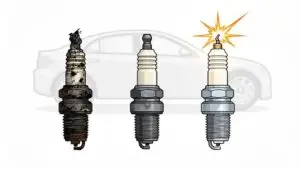
Keeping up with scheduled vehicle maintenance is one of the best ways to protect your engine, transmission, brakes, tires, cooling system, and other important components.
You’ve probably heard of the major 30,000-, 60,000-, 90,000-, and 120,000-mile maintenance milestones. But what does your vehicle actually need at each interval?
The answer depends on your vehicle.
Every manufacturer establishes its own maintenance schedule based on the year, make, model, engine, drivetrain, fluids, components, and operating conditions. That’s why your owner’s manual and manufacturer maintenance schedule should always take priority over a generic mileage checklist.
Still, these major mileage points are excellent opportunities to review your vehicle’s maintenance history and identify services that may be due.
At Kwik Kar Oil Change & Auto Care in Richardson, TX, our technicians can inspect your vehicle, review its maintenance needs, and help you determine what services are appropriate based on your vehicle and its condition.
There is no universal maintenance package that applies to every vehicle.
Depending on the manufacturer, mileage-based maintenance may include inspection, servicing, or replacement of items such as:
Some vehicles require certain services much earlier or later than others.
Before approving a mileage-based service, check what the manufacturer actually recommends for your vehicle.
At approximately 30,000 miles, many vehicles are still relatively new, but this is a useful point for reviewing routine maintenance and inspecting components that have accumulated their first significant period of wear.
Depending on the vehicle manufacturer’s schedule, a 30K service may involve:
Early maintenance establishes a strong foundation for the rest of your vehicle’s life.
It’s also a good opportunity to identify irregular tire wear, fluid leaks, brake wear, battery deterioration, or other developing problems before they become more expensive repairs.
However, don’t automatically replace components simply because the odometer reaches 30,000 miles. Follow the manufacturer’s requirements and the actual condition of the vehicle.
By 60,000 miles, your vehicle has experienced considerably more heat cycles, road conditions, stop-and-go driving, and component wear.
The 60K milestone is therefore an important time for a more comprehensive maintenance review.
Depending on the vehicle, recommended services may include:
Not every vehicle needs all of these services at 60,000 miles.
For example, transmission-fluid and spark-plug replacement intervals vary significantly among manufacturers and powertrains.
Always check the maintenance schedule for your specific vehicle before performing mileage-based service.
At approximately 90,000 miles, preventive maintenance becomes increasingly important because many vehicles are approaching the point where original components may begin showing more significant wear.
A 90K maintenance review may include:
Mileage alone doesn’t determine when a component should be replaced.
Brake pads, tires, batteries, suspension components, belts, hoses, and other wear items should be evaluated based on their actual condition and the manufacturer’s specifications.
For example, two vehicles with 90,000 miles may have very different maintenance needs depending on how and where they’ve been driven.
Reaching 120,000 miles is a significant milestone, but modern vehicles can continue providing dependable transportation well beyond this point when they’re properly maintained.
At 120K, it becomes especially important to review the vehicle’s complete maintenance history.
Depending on what has already been performed and what the manufacturer specifies, technicians may evaluate:
This does not mean every item needs replacement at 120,000 miles.
The goal is to determine what’s actually due, what’s showing wear, and what has already been serviced.
It can.
Driving around Richardson and the Dallas-Fort Worth area may expose your vehicle to high summer temperatures, heavy traffic, extended idling, frequent short trips, and stop-and-go driving.
Towing, dusty environments, repeated short-distance driving, and other demanding operating conditions may also fall under a manufacturer’s severe-service schedule.
If your driving habits qualify as severe service, your manufacturer may recommend servicing certain components more frequently.
Check the severe-service section of your owner’s manual rather than relying on a universal mileage recommendation.
Generic maintenance charts are useful for understanding what might need attention, but they cannot tell you exactly what your vehicle requires.
A manufacturer maintenance schedule considers your specific:
That’s why we recommend combining three sources of information:
Manufacturer recommendations + vehicle maintenance history + current vehicle condition.
Together, these provide a much more accurate maintenance plan than mileage alone.
Ignoring required maintenance can allow relatively minor problems to develop into more expensive repairs.
Depending on the neglected component, delayed maintenance can contribute to:
Preventive maintenance also gives technicians opportunities to identify leaks, worn components, unusual tire wear, or other developing issues before they leave you stranded.
A Digital Vehicle Inspection (DVI) provides a documented assessment of your vehicle’s condition.
Rather than recommending services solely because your odometer reaches a certain number, an inspection can help identify what currently needs attention and what may be monitored for future service.
Depending on the inspection, technicians may evaluate areas such as:
This helps you make maintenance decisions based on both the manufacturer’s schedule and your vehicle’s actual condition.
If your vehicle is approaching 30K, 60K, 90K, 120K miles or beyond, Kwik Kar Oil Change & Auto Care in Richardson can help you determine what maintenance is actually due.
Our team provides preventive maintenance and complete automotive services, including:
Our Richardson shop features ASE-certified technicians, RepairPal Certified service, Digital Vehicle Inspections, and a 24-month/24,000-mile warranty on qualifying repairs.
Instead of automatically selling a generic “60K” or “90K” package, the goal should be to determine what your specific vehicle actually requires.
It depends on your vehicle manufacturer. A 30K maintenance visit commonly involves reviewing oil and filter service, tires, brakes, filters, fluids, battery condition, belts, hoses, steering, and suspension. Check your owner’s manual for the exact requirements for your vehicle.
There is no universal list of components that must be replaced at 60,000 miles. Depending on the vehicle, certain filters, fluids, spark plugs, or other components may be due for service. Follow the manufacturer’s maintenance schedule rather than replacing parts based solely on mileage.
A 90K service should include a review of your manufacturer’s scheduled maintenance requirements along with an inspection of important systems such as brakes, tires, fluids, battery, cooling system, transmission, steering, suspension, belts, hoses, and ignition components.
120,000 miles is a significant milestone, but mileage alone doesn’t determine a vehicle’s condition. Maintenance history, driving conditions, vehicle design, and how well problems have been addressed all influence reliability.
Not necessarily. Services should be based on your manufacturer’s maintenance schedule, previous service history, and the vehicle’s current condition. Avoid replacing components simply because a generic checklist says they’re due.
Start with your owner’s manual or manufacturer maintenance schedule. Then compare those requirements with your vehicle’s service history and current condition. A professional inspection can help identify maintenance that is due or developing problems that need attention.
Yes. High temperatures, extended idling, stop-and-go traffic, towing, frequent short trips, and other demanding conditions may affect maintenance requirements. Your owner’s manual may provide a separate severe-service schedule for these operating conditions.
Kwik Kar Oil Change & Auto Care provides scheduled maintenance, Digital Vehicle Inspections, oil changes, diagnostics, and complete auto repair services for drivers in Richardson, Texas and nearby communities.

Get upto $20 OFF on all services.